Peak Design Outdoor Backpack Review: I Tested Both 25L and 45L Sizes
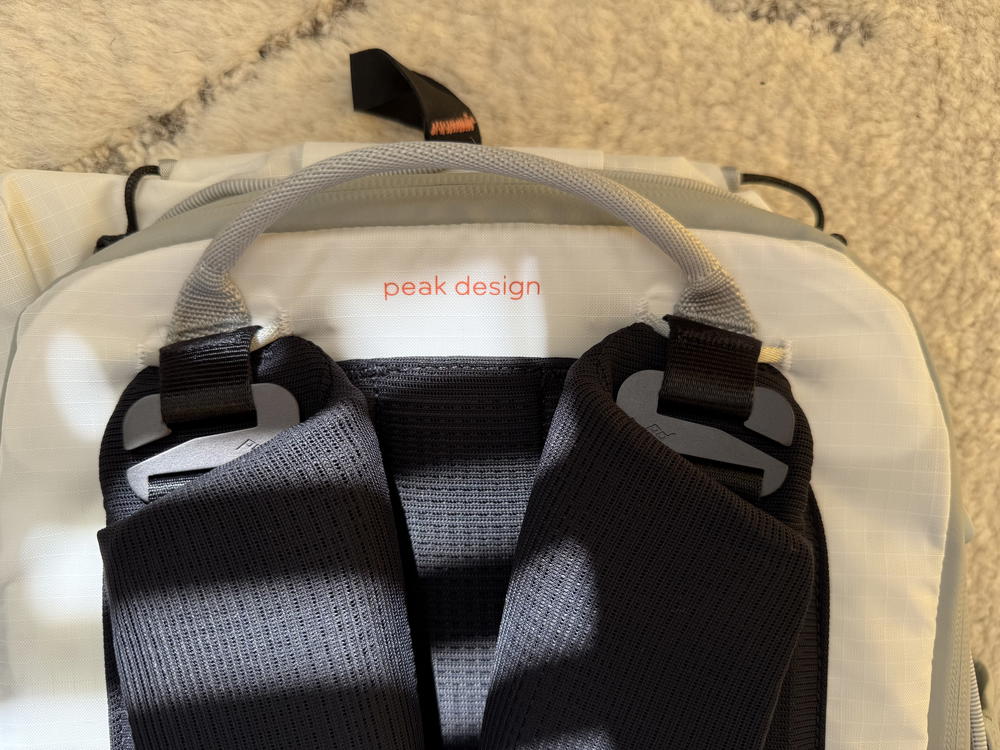
Having known the Peak Design brand for years, I had to find out how the Peak Design Outdoor Backpack (in the 25L and 45L sizes) were different from the Travel Backpack and Everyday Backpack lines. In this review, I jump into the feature details.
This article may contain affiliate links. We earn a small commission when you purchase via those links — at no extra cost to you. It's only us (Becca & Dan) working on this website, so we value your support! Read our privacy policy and learn more about us.
I’ve been a Peak Design fan for years, so when they launched their new Outdoor Backpack line, I was genuinely excited (and very intrigued) to see what the masterminds at this brand had come up with.
What I didn’t expect was how different these backpacks would feel from the PD Everyday Backpack series that both Dan and I have traveled with for half a decade.
We tested both the 25L Outdoor Backpack and 45L Outdoor Backpack, and now we get it: these backpacks represent a completely new direction for Peak Design. If you’re used to their sleek, minimalist aesthetic, prepare for something entirely different. In this review, we’re laying out an explainer for how to think about the Outdoor Line, and where the gaps are between PD’s mainstays.
First Impressions: A Learning Curve
My first impression of the Peak Design Outdoor Backpack in 25L was that it does not look like my Peak Design Everyday Backpack in roughly the same size. The look of the Outdoor Backpack is completely new to Peak Design, and I had a new learning curve of getting to know the features.
At first glance, I was actually completely perplexed. Both the 25L and 45L came nearly flat-packed, rather than structured, like our 45L PD Travel Backpack and 25L Everyday Backpack, which have true “very Peak Design” noticeable structures and shapes that keep gear organized and protected.
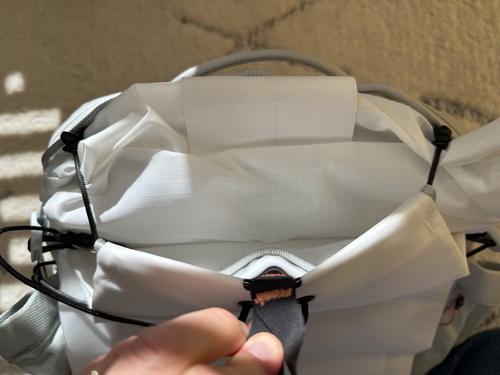
But the Outdoor Backpacks? They’re made of materials that have new feels, closer to what my raincoats feel like. And these bags open completely differently: there are more drawcords, straps and zippers, in new places. If you’re like us, stuck in a world of Peak Design’s core backpack collection, you come to expect where the zippers go, how the storage systems and packing cubes work, and the like.
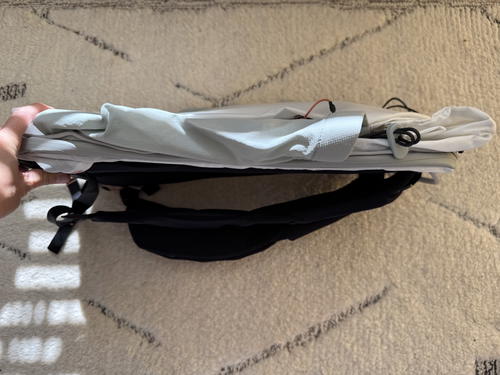
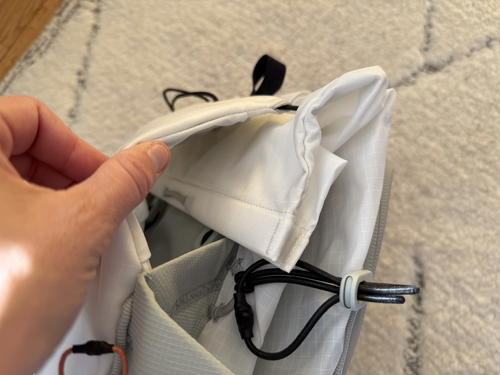
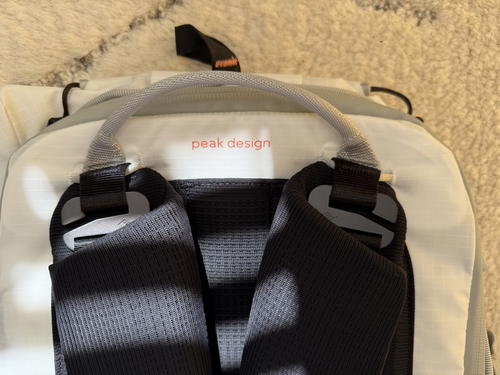
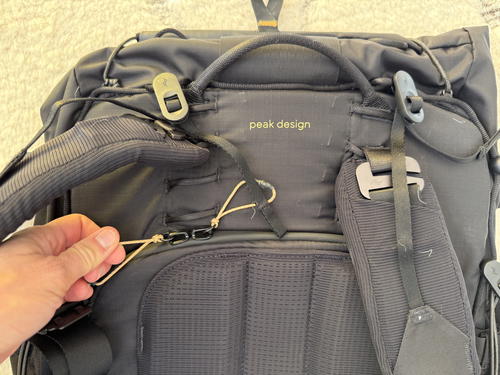
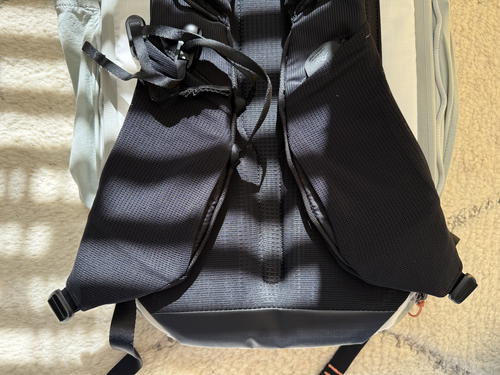
The materials feel complex in the best way possible. I’ll call it “mixed media” because there are so many different textures working together. You’ve got mesh pockets, weatherproof “Terra shell” ripstop fabric on the exterior, new nylon webbing on the back layers for ergonomic support, and these really cool drawstrings that add both function and visual interest.
Buying later?
Get Peak Design deals in your inbox.
We’ll email worthwhile offers we find for Peak Design. Skip the hunt and decide when the price feels right.
Peak Design Outdoor Backpack 25L: Daily Carry Meets Adventure
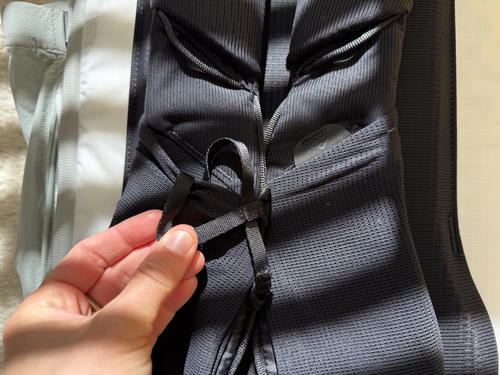
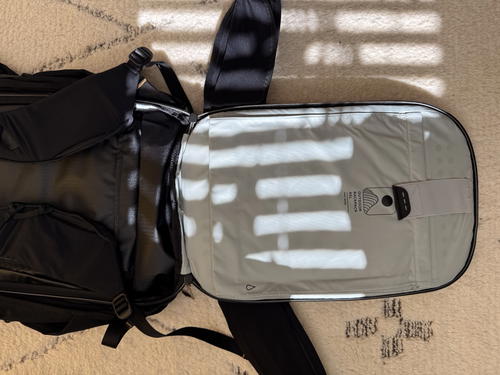
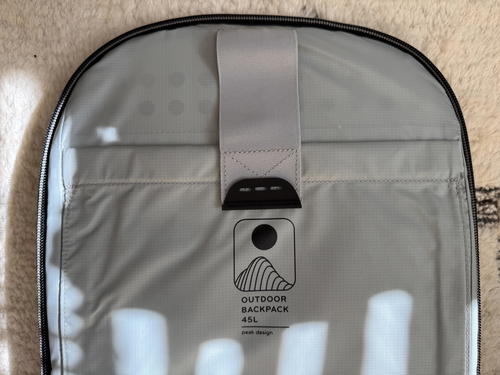
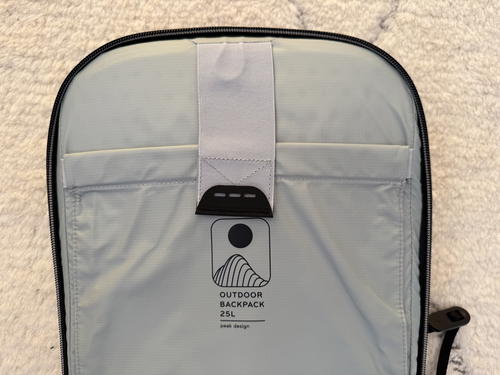
The 25L size of the Outdoor Backpack is perfect for my daily photography carry. What I love most about it is how the laptop compartment works. It’s good for my 13” MacBook Air and Dan’s 14” MacBook Pro. It has this nice, thick Velcro elastic strap that keeps my computer secure while I’m moving around. And that’s whether I’m traveling, or just walking around the city.
Laptop sleeve
What’s really convenient (and new to me) is that the entire laptop sleeve acts as the back flap. It has a full zip-around that lets me access the interior cavity without having to dig through the main compartment. This is brilliant when I’m outside hiking or trekking with a full bag of camera gear.
25L size
The 25L packs a daily carry of my photography gear perfectly. I can fit a camera body, lenses and accessories, with room to spare for things like a balled-up rain layer or rain shell, some snacks, a water bottle, my laptop, charger and headphones (for immediately dumping photos when I’m done outdoorsing) and phone/wallet/keys.
Extreme weatherproofing
The weatherproofing is what gives me confidence for hanging out in nature and all its surprises. Leave it to Peak Design: this is a company that I trust for rainproofing my travel bags. My Peak Design bags have held up through the years when I’ve been caught in rain or some wet weather, and the flaps/weatherproofed zippers/rainproof materials all work together to create protection.
So with the Outdoor Line, these features are taken to the max. Peak Design is not messing around when they promise an Outdoor Backpack: it’s one that is going to take you outdoors, with all your expensive stuff (like $10,000 of camera gear or tech) and promise that it’s going to stay dry and safe.
Total weight
At 2.54 lbs, it’s lightweight enough for all-day wear. Compare this to my 20L Everyday Backpack from Peak Design, and that’s actually 4.43lb, with dividers.
So at a bit more than half the weight, it’s a backpack that is designed to do the same job, plus last for days outdoors, protecting roughly the same volume of your beloved camera/travel tech necessities.
Peak Design Outdoor Backpack 45L: The Adventure Workhorse
Now, the 45L version of the Outdoor Backpack is where things get really interesting. I’m wildly impressed with this backpack, but I have to come clean about something. I was really perplexed when I first laid eyes on it because it has the ability to pack flat and arrives flat in its box.
This means even a backpack this big could fit into another piece of luggage. And maybe that is the point.
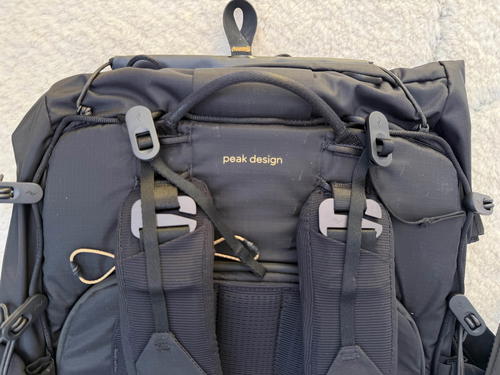
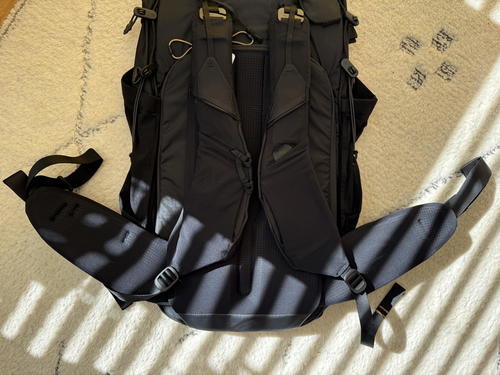
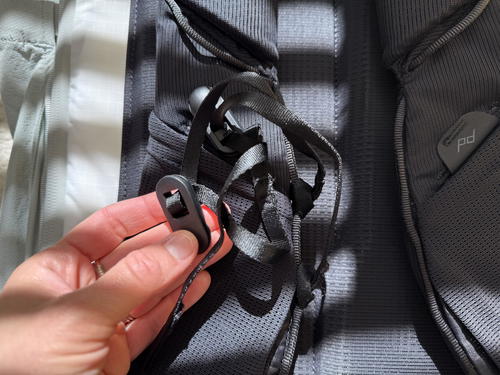
The level of intricacy in how it can be used to plan travel, as well as engage in outdoor activities (even some extreme ones like scaling rocks, if you were to want to take this much weight with you), is potentially unmatched. Two things I want to point out are the vest-style shoulder straps, which really do remind me of a running vest or hydration vest.
And there’s also the hip belt, to support all the weight (and this is where it differs from the 25L version). It’s nicely built, with adjustments, and of course, being a Peak Design design, it is far from goofy.
At every corner, there’s an adjustable strap or cord, and the laptop sleeve can be used to store a water bladder for hiking hydration.
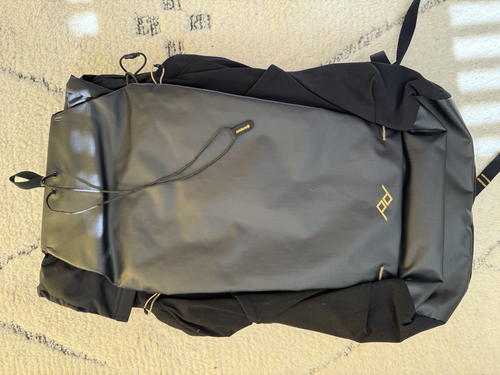
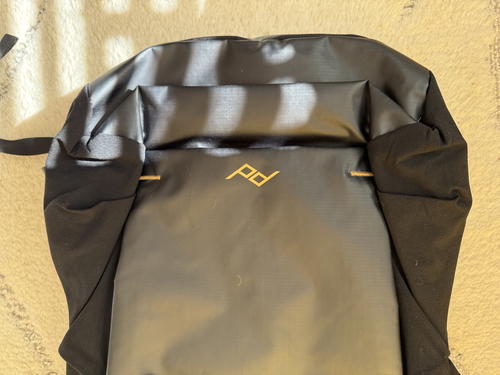
Where I’m continually surprised is at how much it fits and at how much it weighs (3.42 lbs) even with all the trimmings it comes with. Peak Design bags are usually on the heavier side, and this is the opposite of that. Let’s compare it to my Peak Design Backpack in 45L: it weighs 4.5 lbs and it’s a different product completely, what with being built from heavy-duty materials on the outside and being meant to get thrown around as luggage.
What Makes These Backpacks Special
What’s cool about both of these backpacks is the integration of outdoorsy elements. Peak Design bags did this before, but they truly nail it now with the Outdoor line. The weatherproofing, the thoughtful organization, the way everything works together for both photography and outdoor adventures.
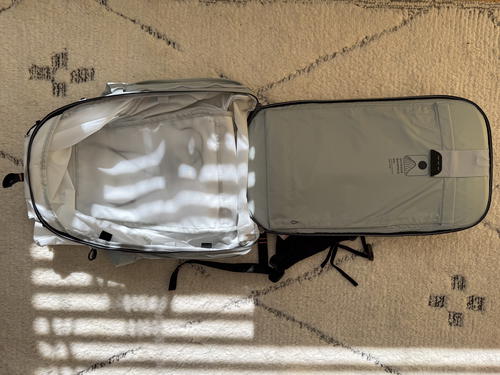
Both backpacks use Peak Design’s Terra Shell fabric, which is “functionally weatherproof.” And to score protection from elements of wet weather, the top closure format is a roll-top “Ultra Cinch,” which allows for quick one-hand closing and opening.
What makes them special? It’s for sure all in the design (no kidding – “Peak Design”). By that I mean that no other brand could’ve dreamed up these backpacks: at first glance, they’re doubtful because they’re different, but they are built to perform. It’s all in the modernity, the methods for expansion, the ability to accessorize and compartmentalize within them and the seamless use, as always, with the Peak Design “ecosystem” of pouches and anchor links that snap in.
The Bottom Line
The Outdoor Line Backpacks aren’t your typical Peak Design backpacks. They’re more rugged, more feature-rich, and more focused on outdoor adventures, with all the benefits that make trekking, camping, hiking and sporadic-weather travel possible, while you’re outfitted with all your gear.
If you’re looking for a backpack that can handle both your daily photography needs and your weekend hiking trips, these backpacks are the real deal. They take some getting used to, but once you discover how they work, I don’t think there is any turning back.
The 25L is perfect for day trips, weekend outings and even commuting, while the 45L is ideal for multi-day adventures like camping, road trips or trekking, when more gear comes with you.
Both offer the weatherproofing and organization that Peak Design is known for, but with a more outdoor-focused approach.
Next Steps: Check out the Peak Design Outdoor Backpack Collection
This review is just scratching the surface of what these backpacks can do. To try one out from the Peak Design website, here are the direct links to each backpack size:
- Shop the Peak Design Outdoor Backpack 25L
- Shop the Peak Design Outdoor Backpack 45L
- Shop the Peak Design Outdoor Backpack 18L - I don’t have this one, but I’m looking forward to checking it out.
Ready to dive deeper into Peak Design gear? Check out our related reviews:
- Peak Design Everyday Backpack Review - Our take on the classic Peak Design daily carry solution
- Peak Design Travel Backpack Review - My #1 travel backpack that has taken me around the world - for longer trips and travel
- Best Camera Backpacks for Travel - More photography backpack options for people who want to protect their camera setup while on the road
🎒 Found the right gear?
We research and test the gear we recommend, so you can pack with confidence. If our suggestions improved your gear picks, treating us to a coffee keeps the reviews coming.
Help us test more gearYou may also like
-
![A woman in a mauve sleeveless dress stands on a grassy lawn beneath a tree.]()
Free Fly Women's Breeze Dress Review: Lightweight for Humid Travel
If you're taking a warm-weather trip that's bound to get you into humidity, try out the Free Fly Women's Breeze Dress. Here's why this lightweight dress handles heat and humidity like a breeze.
-
![wandrd d1 fanny pack]()
WANDRD D1 Fanny Pack Review: For the Rugged Technical Traveler
The WANDRD D1 Fanny Pack features waterproof YKK zippers and magnetic buckle for rugged and technical travelers. See why it's perfect for photography and active travel in this review.
-
![A person wearing white sneakers walks across a brick path.]()
Vessi Weekend Sneaker Review: Lightweight Waterproof Comfort for Travel
I've been wearing the Vessi Weekend Sneaker for 4 months, and it's become my go-to everyday waterproof sneaker for travel. Here's why this lightweight, machine-washable shoe works so well.
-
![A woman in maroon joggers stands against a wall with yellow pipes.]()
Public Rec Women's All Day Jogger: An Enthusiastic Review
My review of the Public Rec women’s All Day Jogger discusses why these versatile athleisure pants are good for travel, fit nicely for petite women and flatter anyone nicely.
-
![A woman adjusts her sunglasses while wearing black gloves and a dark parka on a rooftop.]()
OROS Women’s Orion Parka: the Last Jacket You’ll Ever Need
I review the OROS Orion Women's Parka as a weatherproof performance winter coat that’s no-bulk, insulated and cozy, with a modern silhouette fit for active women who travel.
-
![A woman takes a mirror photo wearing gray wide-leg pants with a white drawstring.]()
Free Fly Women's Bamboo Fleece Wide Leg Pant Review
These Free Fly wide leg pants are very soft and cozy. Here's my honest review of these travel-friendly fleece pants. Learn about all the features, sizing and why they're perfect for lounging and travel.