Day Trips
Day trips are a wonderful way to practice traveling with a baby. In this guide, see what to keep in mind about starting to travel for just a day with a baby and how to do it.
Login Required
Please login with your email to access this course content. Not signed up? Get it for free here.
Login to AccessDay trips are the best “first” type of trip that you can do with a baby, because you’re leaving the house for longer than you may have had to before.
Depending on the age of your baby, you’ll need to pack for plenty of milk, snacks, meals, naps, diapers and everything in between.
We did a handful of full-day or half-day trips before “committing” to longer trips with our baby. We wanted to be sure we were ready!
We opted to take our car on a day trip, which gave us access to leave wherever we were, and be on our own timeline. You can take a train or a bus, but you might not have as much flexibility in case you find any delays or cancelations.
Deciding where to take a day trip
There’s no perfect distance for a day trip, and being away for the day with your baby is what matters! Be sure to look up interesting trips in your area when brainstorming.
Hours in the car
Consider how your baby does with car rides, before committing to long hours in the car.
Our baby went through a period of being highly fussy in the car (around 7-8 months) and we decided to nix day trips until that phase was over. This meant saying no to a day trip to go to the beach because we didn’t think it would be an enjoyable car ride for us, as well as for her.
Through the months, we still struggle with fussiness and backseat boredom from time to time—no child performs perfectly in the car every time! We found that if someone sits with our baby or toddler in the backseat, it makes the trip more enjoyable for everyone. Read more about road tripping at our Road Trips page.
Places to visit family or friends
Visiting other friends with babies is great because you can use things in their home like changing tables, cribs, extra travel-sized cribs for naps, toys and baby food.
Even just stopping by for a half hour, if you have family or friends on the way to your destination, can be a breath of fresh air for a comfortable place to change a diaper or sit down for nursing.
Places of interest
For younger infants, the destination for the day trip is up to you. Going on hikes, or to lakes, or to cities with lots of action to see, might be interesting for babies under 1 year. Consider our suggested travel activities for 3-6 months and for 6-12 months.
Consider that until your child is roughly 6-8 months old, any places of interest are more for you as parents, than for them—at least that was the case for us.
- If you have a toddler (12+ months), then going to places like zoos, farms, natural hikes where you can see animals or places with playgrounds to stop at will probably be best. Anything interactive where you can stop and experience something new for them to see, hear, touch or smell or taste, can be really fun.
- For kids who like to walk and be active (12-24 months), make sure you pack in opportunities to play at playgrounds or run around at picnic grounds or in yards. Be sure to reference just how much activities can change in a year, by visiting our page for travel activities at 18-24 months.
What to take
For a day trip, there’s still a set number of things to take with you, so that feeding, eating and naps can happen when they need to.
Feeding
Just like you would pack for a longer trip, pack up everything you need for a day of breastfeeding, pumping, or formula feeding, and/or solid food, snacks, food for the car, bottles, water cups, juice boxes and more. If it’ll be your first time taking a day trip, consider everything you need during daytime to successfully feed your child.
All of this depends on your infant’s age. If you are exclusively pumping and will need to do it on the go, consider a travel or mobile breast pump. Then, check out what to know about feeding during travel.
Sleep
For naps: they differ so much at every age! Come prepared with a travel crib if your child can nap at a friend or family member’s home during this day trip. Otherwise, bring a baby carrier or stroller with a sun shade, wind barrier or rain cover. Visit the quick tip naps guide to learn more.
If your day trip will last past dinnertime and if you’ll be driving home at your baby’s bedtime, pack a set of pajamas to dress your child in before the car ride home. That way, you can do a seamless transfer into the crib upon return (hopefully).
Dining out
If you want to avoid bouncing your child on your lap during mealtime and aren’t sure if restaurants will have high chairs available, take a folding high chair that packs up small (and a bib). We like the Panda Ear Portable Baby Seat.
You can attach your infant to a regular chair, so they’ll be basically as high off the ground as they would be in a high chair.
If you’ll be nursing at a restaurant, consider a nursing cover that you like. Nursing covers should be breathable, in case your child falls asleep under one. I like the Quince nursing shawl.
Car toys
This has been a continual challenge for us, and every family has a different take on it!
While some babies or toddlers like to “read” in the back seat, some like to fidget with fidget toys. Some don’t mind watching iPads! Infants between 3 and 8 months might LOVE to chew on teething rings the entire time.
We have a reserve of toys in the front seat, and when we hear some fussing, we swap out a new toy from the front seat. This means that when we get to our destination, we have a huge pile of rejected toys in the back seat.
Sleep and naps on a day trip
Of course, infants under 24 months will take anywhere from 1 to 4 naps a day, depending on age! Newborns may cat nap, and toddlers may take 1 big nap each afternoon.
When our child got on more of a nap schedule, we planned ALL our day trip car rides around nap times. That made things a bit more of a breeze, and predictability helped a lot with our itineraries.
We also planned day trips to destinations to align with her nap time. For example, we’d take 2-hour car rides, because she would nap for 1.5 hours. With expecting that falling asleep could take 15-30 minutes, that distance was perfect for us.
Naps on the go
For naps on the go, consider how your child can fall asleep, whether in the stroller, baby carrier, travel crib at family/friend’s house or in the car.
For day trips when our daughter took 3 naps, we’d “punctuate” our day with nap time. We knew there’d be a 9am, a 1pm and a 4pm, for example. We estimated that they’d all be about 30-40 min. With this, we could do a little bit of driving around a small area, or get a nap in the stroller during a walk at a nature reserve.
For day trips when our toddler only took 1 nap (after 12 months), we acknowledged that the trip out and the trip home would not fall at nap time. We would typically plan to be somewhere where we could set up a travel crib in a quiet place, or, commit to the baby carrier and a short nap while on the go.
What to do
What’s there to do on a day trip? Well, it depends on the age of your child, but a few ideas are:
Children under 1 year
For children under 12 months, they may still be OK hanging out in a baby carrier, in a stroller or dozing off while you are out. Here are some ideas for day trips when your child is younger than 1 year:
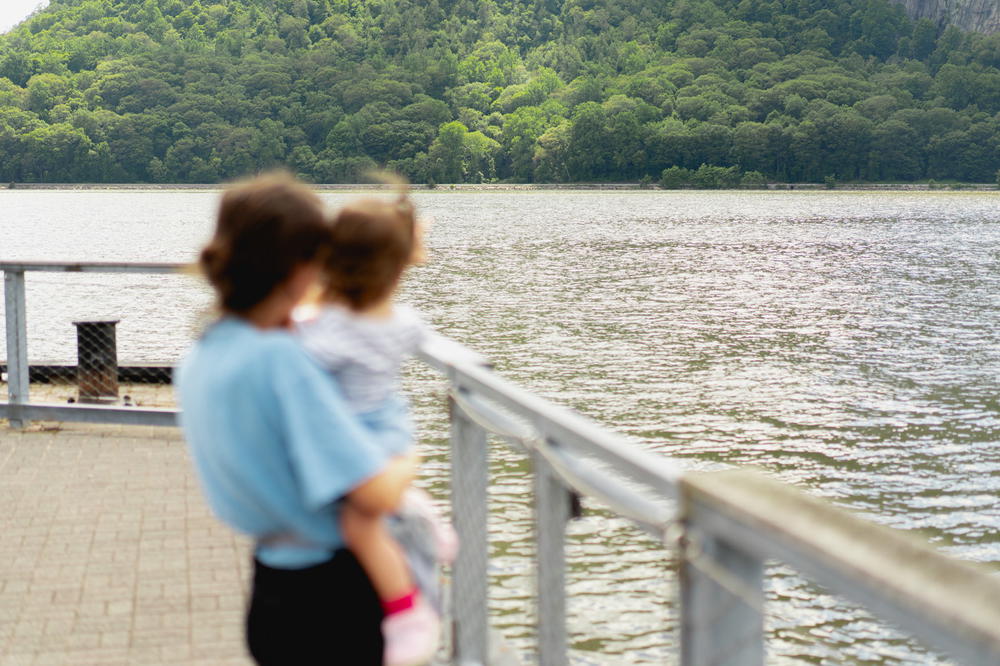
- A walk around a lake
- A brief and easy family hike
- Hanging out at a family-friendly brewery
- Walking around a small town and dipping into shops
- Big walks in a city, and stopping at parks
- Sitting down for a meal at a new restaurant where babies are welcome
- County fairs
Children older than 1 year
For children older than one year, day trips can be a bit more interactive. These have been some of our favorite day trips with a child older than 1 year:
- Petting zoos and zoos
- Farms and experiences like apple picking
- Gardens
- Playgrounds
- Water parks
- Visits with other toddlers
- Music events or small concerts
- Festivals or street fairs
You can read more on how to determine “baby-friendliness” of a destination.
Search
Related Course Content
- How to find interesting trips in your area
- Road trips
- Activity ideas (3-6 months)
- Activities (6-12 months)
- Activities (18-24 months)
- Food, food safety and traveling with milk
- How to plan travel around your infant's naps
- Baby-friendliness of different places (how to choose a destination)
Related Articles
No related articles found.
Getting started
Planning your trip
- Are you ready to take a trip?
- Types of trips to take
- How to find interesting trips in your area
- What to pack: and how long to pack in advance!
- When to take a trip with your baby
Health advice
- Quick disclaimer
- Travel insurance
- How to handle your infant getting sick while traveling
- Planning for all potential health issues
International Travel
- What you “really” need to bring
- How is international travel different from domestic with a baby?
- Language barriers during traveling internationally with a baby
- “Baby-friendliness” of different places (how to choose a destination)
- Jet lag
- Passports and visas
- Why choose international travel?
Quick tips
- Accommodation
- Packing
- Smart things to bring
- Food, food safety and traveling with milk
- What to keep in mind (mantras)
- Before, during and after the flight
Bonus content
- How to find affordable flights
- How to plan grocery trips and meals during travel
- How to plan travel around your infant’s naps
- How to decide between buying your infant a seat vs. lap infant
- How to change a diaper on a plane
Free bonus product reviews
- UPPAbaby Minu Travel Stroller + Travel Bag
- The No Reception Club Diaper Bag Backpack
- Yogasleep Travel Sound Machine
- Slumberpod Travel Sound Machine
- BabyBjorn Travel Crib
- Guava Travel Crib
- Baby Tula Travel Baby Carrier Lite
- Munchkin Inflatable Travel Baby Bathtub
Age 0-3 Month Travel Advice
- When Is It Safe to Travel?
- Packing Essentials
- Choosing Your Destination
- Transportation Tips
- Managing Sleep
- Safety
- Are You Ready to Travel With a 0-3 Month Old?